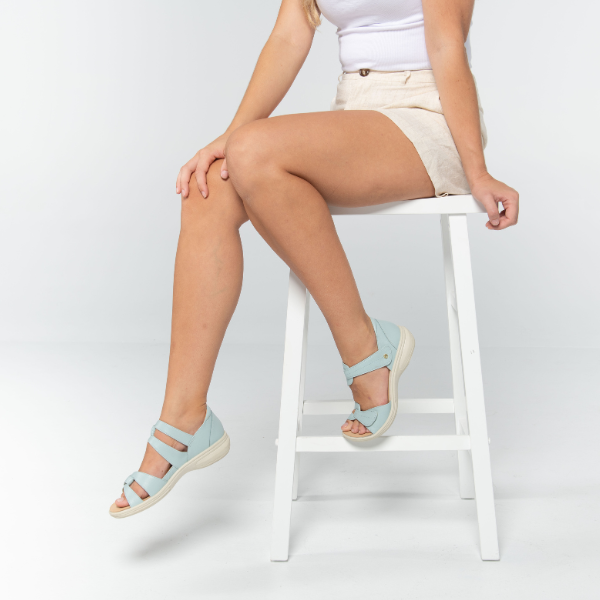











The Comfort Co's Best Shoes for Plantar Fasciitis in Australia
Plantar fasciitis makes the first steps out of bed the hardest part of the day. The right shoe cannot cure it, but it can take real load off the arch and heel, so here are the best shoes for plantar fasciitis at The Comfort Co.
If your first few steps in the morning feel like standing on a stone, you already understand why footwear matters more than most people give it credit for. Plantar fasciitis is stubborn, and the shoes you spend your day in either help the arch or fight it.
I am not a podiatrist. I am the writer who learned the slow way that what sits under your feet changes how the rest of you feels by mid-afternoon. Managing a back injury since 2014 taught me that lesson from the ground up, one supportive pair at a time.
Treat this as a shopping guide rather than a treatment plan. I will walk through what actually makes a shoe supportive for heel pain, the pairs worth trying across our brands, and the point where you should stop browsing and book a professional instead.

The TL;DR
If you only remember one thing: support beats softness. A shoe that props up your arch and holds your heel steady will do more for plantar fasciitis than a squishy sole ever will.
- Look for three things. Firm arch support, a cushioned and stable heel, and a sole too stiff to fold in half.
- Best all-rounders. Supportive sandals from Revere, structured sneakers from Vionic and Scholl, and everyday value from Vitasole.
- Wear orthotics? Choose a shoe with a removable footbed so your own device drops straight in.
- Add the extras. Compression socks and a supportive insole can take more load off the heel.
- Know the line. Pain that lasts beyond a few weeks or bites hard first thing is a reason to see a podiatrist.
Plantar fasciitis, in plain terms
Plantar fasciitis is irritation of the plantar fascia, the thick band of tissue that runs along the sole from your heel to the ball of your foot. It is the most common cause of heel pain, and the giveaway is that sharp first-step pain in the morning that eases as you warm up.1
The load that band carries every day is the part footwear can influence. When your arch collapses and your heel lands hard on a flat, unsupportive sole, the fascia stretches and pulls at the heel with every step. A supportive shoe shares that load, which is why the right pair can make an ordinary day feel manageable again. For the full clinical picture, our podiatrist explainer on what plantar fasciitis is and how it is treated is the place to start, along with our guide to heel spurs and chronic heel pain.
What makes a shoe good for plantar fasciitis
The best shoes for plantar fasciitis share three things: firm arch support that holds the midfoot, a cushioned heel that softens each landing, and a sole stiff enough that it does not bend in half. Get those right and the fascia does less work all day.
Here is what each one does, and why it matters more than a plush footbed on its own.
- Firm arch support. Support under the arch stops it flattening out, which reduces the stretch on the fascia. This is the single most important feature for heel pain.
- A cushioned, stable heel. You want cushioning to absorb impact, but paired with a firm heel counter that stops your foot rolling around. Soft alone is not enough.
- A sole that resists folding. Try to bend the shoe in half. A supportive one flexes only at the ball of the foot, not through the middle. A shoe that folds like a slipper offers the arch nothing.
- A gentle rocker sole. A slight curve at the toe helps you roll through your stride rather than pushing off hard, which eases the pull on the heel.
- Room for your own orthotic. If you already wear a device, a removable footbed lets you drop it straight in without cramping the fit.
The best shoes for plantar fasciitis in Australia
The best shoes for plantar fasciitis in Australia are supportive sandals, structured sneakers and boots that combine firm arch support with a cushioned heel. Across The Comfort Co range, the pairs people with heel pain reach for most come from the Revere, Vionic, Scholl Orthaheel and Vitasole ranges. Here are the picks, grouped by how you will actually wear them.


For warm weather: supportive sandals and slides
A sandal can absolutely work for plantar fasciitis, as long as it has a contoured footbed rather than a flat sole. Skip the flat thongs and reach for something with a built-in arch. Revere sandals are built around a supportive footbed, and the adjustable straps handle any swelling that creeps in through the day.
The Revere Geneva and the three-strap Revere Miami are the easiest place to start. If you prefer a toe-post style, the podiatrist-designed Vionic Bella and the Scholl Wave both keep the arch supported where a flat toe-post would not.
For on your feet all day: structured sneakers
When you are standing or walking for hours, a closed sneaker with a firm heel and real arch support is usually the kinder choice. Vionic builds its shoes around VIO MOTION, a podiatrist-designed support system, and the Vionic Seville is a genuine everyday workhorse. For a walking-focused option, the Scholl Power Walker pairs structure with a cushioned ride.
For everyday value: Vitasole
If you want support without the top-tier price, Vitasole is our own active-comfort brand, built on VX Technology: Perfected Arch Support, a cushioned EVA midsole and a meta-rocker sole. It is designed for people who are on the move rather than for the clinic, which makes it an easy first supportive pair. The Vitasole Venice toe-post and the Vitasole Passion sandal both carry that arch support in a warm-weather shape.
For cooler months: boots that still support
Support should not disappear when the weather turns. A boot with a structured sole keeps the arch working through winter. The Revere Torino and the Vionic Evergreen ankle boot both offer that, so you are not trading support for style once the sandals go away.
If you wear orthotics: choose a removable footbed
Many people with plantar fasciitis already have a custom or off-the-shelf orthotic. In that case the most important feature is a removable footbed so your device sits flat and the shoe still fits properly. Revere is built around this idea, with a removable footbed across most of the range, and our guide to orthotic-friendly footwear explains what to check before you buy.
For the brand-specific angle, our team has also written on why Vionic shoes help with plantar fasciitis pain, which is worth a read if VIO MOTION is on your shortlist.
The extras worth adding: socks and insoles
The shoe does most of the work, but two small additions can take even more load off the heel. Neither replaces good footwear, and neither is a medical device, yet plenty of people find them a useful top-up.
- Compression socks. OS1st plantar fasciitis socks and sleeves use targeted compression zones to support the arch and heel, handy first thing in the morning or after a long day.
- Supportive insoles. A firmer arch-support insole can lift an otherwise flat shoe you already own, or add a little more support to a supportive one.
- Fresh shoes. Support fades as a sole compresses. If a favourite pair has gone soft underfoot, replacing it often does more than any add-on.
How to choose the right pair for your feet
Start with your arch, then test the shoe in your hands before you trust it on your feet. A few quick checks separate a supportive pair from one that only looks the part.
- Know your arch type. A high, neutral or low arch changes what support suits you. Our guide to understanding your arch type walks you through the wet-foot test.
- Do the bend test. Hold the shoe at both ends and push. It should flex at the ball of the foot only. If it folds in the middle, the arch gets no help.
- Press the heel counter. Squeeze the back of the heel. A firm cup holds your foot steady; a soft one lets it roll.
- Check the footbed. If you wear an orthotic, make sure the insole lifts out cleanly.
- Shop later in the day. Feet swell as the hours pass, so an afternoon fitting gives you the truer size.
When to see a podiatrist
See a podiatrist if your heel pain lasts more than a few weeks, is severe with those first morning steps, or is not improving once you switch to supportive shoes. Footwear helps manage the load, but it is not a diagnosis, and persistent pain deserves a proper look.2
A podiatrist can confirm what is going on, rule out other causes of heel pain, and tailor a plan that might include stretching, taping or a custom orthotic. If you are in that spot, our podiatrist-written plantar fasciitis explainer is a good briefing to read before your appointment.
Frequently asked questions
What type of shoe is best for plantar fasciitis?
A closed shoe with firm arch support, a cushioned and stable heel, and a sole that does not fold in the middle is best for plantar fasciitis. Supportive sneakers and contoured sandals both work, while flat, floppy shoes tend to make heel pain worse.
Are sandals or thongs okay with plantar fasciitis?
Supportive sandals with a contoured footbed and an arch, like the Revere or Vitasole ranges, are fine for plantar fasciitis. Flat rubber thongs and unsupported flats are the ones to avoid, because they leave the arch to do all the work.
Do I need custom orthotics, or will supportive shoes do?
Many people manage plantar fasciitis with supportive shoes and an off-the-shelf insole alone. If the pain is persistent or severe, a podiatrist may fit a custom orthotic, in which case you want shoes with a removable footbed so the device fits properly.
Are Vionic shoes good for plantar fasciitis?
Vionic shoes are built around VIO MOTION, a podiatrist-designed support system with a contoured footbed, which is why they are a popular choice for heel pain. Styles like the Vionic Seville sneaker and Vionic Bella sandal keep the arch supported through the day.
How long until the right shoes help?
Most people notice their feet settle within a week or two of switching to supportive footwear, though plantar fasciitis can take several months to resolve fully.3 Footwear is one part of the picture alongside stretching, load management and, where needed, professional care.
Find your supportive pair
Browse the shoes our customers with heel pain reach for most, all in one place.
Shop plantar fasciitis shoesReferences
- Healthdirect Australia. Plantar fasciitis. healthdirect.gov.au
- Cleveland Clinic. Plantar Fasciitis. my.clevelandclinic.org
- American Academy of Orthopaedic Surgeons (OrthoInfo). Plantar Fasciitis and Bone Spurs. orthoinfo.org