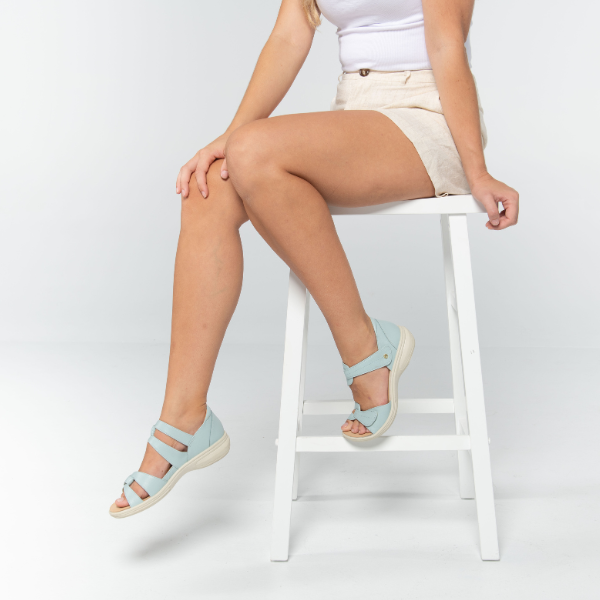











Is Walking Enough? Walking vs the Gym for Everyday Fitness
Walking is the most underrated thing you can do for your health. It is also not quite the whole picture, and that is completely fine.
Walking might be almost everything your body is asking for. Here is the small bit it misses.

Tosh Coombridge
Everyday Movement Coach
Twelve years into CrossFit and still cheering on anyone brave enough to lace up and try.
I get asked this one a lot, usually by someone who has just started walking properly for the first time and is loving it. "Is this enough? Do I actually need to do more?" It is a lovely question to be asked, because it means someone has found a way of moving that they want to keep. The fitness world tends to answer it with a loud no, usually followed by something to buy or a reason to feel guilty. The honest answer is calmer than that, and a good deal kinder.
It is no secret that I love the gym. Twelve years of training in, it is still my second home. The gym is not for everyone though, and that is completely fine. Walking is for everyone. Unless something has gone wrong, we all already do it, which makes it the best starting point there is. For a huge chunk of what your body needs, a daily walk does the job beautifully. There is one thing it cannot do on its own, and once you know what that is, you can add it in without your whole life turning into a gym timetable.
Let us walk through it together, pun absolutely intended.
Section 01
The short answer
Walking is enough to transform your health, and it is not enough to cover everything on its own. Both of those are true at the same time.
For your heart, your head, your energy and your risk of a long list of chronic conditions, a daily walk is one of the best-value things you will ever do. What it does not do well is build and keep the muscle and bone strength that we all lose a little of as the years tick by. That part needs a different kind of effort, and it is a smaller ask than most people fear.
The short of it
Walk for your heart and your head. Add a little strength work for your muscles and bones. Between them, you have the whole picture.
Section 02
What walking is brilliant at
I never want to undersell walking, because it quietly does an enormous amount. The research on daily steps makes for cheerful reading. A large study pooling data from tens of thousands of people found the benefits kick in early, at surprisingly modest step counts, and keep climbing from there.1 The biggest gains landed around 9,000 to 10,000 steps a day, where the risk of dying over the follow-up period fell by close to 40 per cent, with heart benefits stacking up along the way.1
It is not only the body, either. Walking is one of the kindest things you can do for your mood. A 2024 review of nearly 100,000 adults found that 5,000 or more steps a day was linked to fewer depressive symptoms, with bigger step counts tied to greater benefit.2 Some of my own best thinking happens on a walk with no podcast, no goal, just moving.
The barrier to entry is basically zero. No membership, no technique to learn, no waiting for a rack. You already know how. That is the magic of it.
~40%
lower risk of death was linked to walking around 9,000 to 10,000 steps a day in a large pooled study1
The short of it
Steps are powerful medicine for your heart and your mood, and the benefits start long before you hit any magic number.
Section 03
The one thing walking cannot do alone
Here is the honest gap. Walking is an aerobic activity, which means it is fantastic for your heart and lungs and general get-up-and-go. What it does not really do is challenge your muscles hard enough to keep them strong, or load your bones enough to keep them dense.
From our thirties onward, most of us slowly lose muscle if we give it no reason to stay. It is a normal part of ageing, not a personal failing, and the good news is that it responds well to being asked to work. Health bodies are clear that strength or resistance training is the main way to hold on to muscle and support bone as we get older, in a way that cardio alone does not.3 Strong muscles are what keep you steady on your feet, carrying the shopping, getting off the floor after playing with the grandkids, and walking further for longer.
None of this means walking is lesser. It means walking and strength work are teammates, each covering what the other cannot. The gym is one place to do the strength half, and it is the one I love, but it is not the only way and it is not compulsory.
The short of it
Walking keeps your engine healthy. Strength work keeps the frame around it strong. You want both, and neither replaces the other.
Section 04
What the guidelines actually ask for
This is the part that surprises people, because it is far gentler than the fitness world makes it sound. Australia's physical activity guidelines for adults ask for 150 to 300 minutes of moderate activity a week, which a decent daily walk covers on its own.4 Then they ask for muscle strengthening on at least two days a week.4 That is it. Two.
Two short sessions is not a bodybuilding programme, and it is not about chasing a certain look. It is a couple of pockets of time where you ask your muscles to work against something, whether that is your own bodyweight, a couple of dumbbells, a resistance band, or a few loaded carries around the house. The walk handles one half of the guidelines. Two little strength sessions handle the other.
2
strength sessions a week is all the guidelines ask for, alongside your walking4
The short of it
Your daily walk likely covers the cardio side already. The strength side is just two short sessions a week.
Section 05
How to get both without it taking over
I am a firm believer that the best plan is the one you will actually come back to, so let us keep this light. Here is how I would fold strength in around your walking, no gym required unless you fancy one.
- Keep walking as your base. Do not change a thing here. Your steps are already doing the heavy lifting on the cardio front.
- Add two short strength sessions a week. Twenty minutes is plenty to start. Sit-to-stands from a chair, a couple of push-ups (even if they are against a wall or on your knees), a set of steps up and down, and a carry with a heavy bag all count.
- Use what is around you. A loaded shopping bag in each hand, a backpack on a walk, the stairs instead of the lift. Strength does not have to look like a gym to be real.
- Let it be imperfect. A rushed ten minutes beats a perfect session you keep putting off. I have done plenty of half sessions and they still counted.
- Progress slowly. A little heavier or a few more reps over the weeks. There is no rush and no finish line, just a habit you get to keep.
If you would rather build the walking habit first and add strength once it is second nature, that is a smart order too. Our guide to why 10,000 steps a day is worth chasing is a good place to start, and the best walking shoes for women in Australia will keep those steps comfortable.
The short of it
Keep your walk, add two easy strength sessions, use the stairs and the shopping bags, and let it be gloriously imperfect.
Section 06
Why your walking shoes still matter
Here is the bit closest to my heart, since I am the one who bangs on about feet. If walking is going to carry half of your weekly movement, the thing between you and the footpath matters more than people think. Sore feet are one of the most common reasons a promising new walking habit quietly fizzles out, and that is such an avoidable way to lose momentum.
This is exactly what Vitasole is built for. Every pair carries VX Technology, which is our shorthand for a rocker sole that helps your stride roll along smoothly, cushioning that softens each step, and arch support that keeps your feet feeling fresh deeper into the day. Twelve years of training has made me a firm believer that what is on your feet changes how the whole session feels.
Walker Mesh III
If you want one pair to build a walking habit around, the Walker Mesh III Active Sneaker is the easy answer. Breathable mesh, that smooth VX ride underfoot, and a fit that comes in medium and wide so your toes are not fighting for room on the long ones.

Vitasole
Walker Mesh III Active Sneaker
Breathable, cushioned and built on VX Technology for the everyday walker who wants their feet to feel good at step one and step nine thousand.
Shop the Walker Mesh IIIThe short of it
Comfortable feet keep the walking habit alive. Good walking shoes are not a luxury here, they are what keeps you coming back.
Quick questions
Quick questions
Is walking enough exercise on its own?
Walking on its own covers the cardio side of health well and delivers real benefits for your heart, mood and longevity. It does not, by itself, keep your muscles and bones as strong as they could be. For that you want to add strength work on at least two days a week alongside your walking.
How many steps a day should I aim for?
Benefits begin well below 10,000 steps, so any increase helps. The bigger gains showed up higher up, with around 9,000 to 10,000 steps a day linked to close to a 40 per cent lower risk of death in a large pooled study, so that range is a solid target to build toward at your own pace.
Do I need to go to the gym to get strong?
No. Strength training simply means asking your muscles to work against resistance, and that can be your own bodyweight, resistance bands, dumbbells at home, or loaded carries like heavy shopping bags. A gym is one option, not a requirement.
Can I build muscle just by walking?
Walking helps maintain general leg function and mobility, but it does not provide enough resistance to build or rebuild much muscle. Muscle responds to being loaded and challenged, which is what strength or resistance training is for.
How much strength work do the guidelines recommend?
Australia's physical activity guidelines for adults recommend muscle strengthening activities on at least two days each week, alongside 150 to 300 minutes of moderate activity, which a daily walk can cover.
Your next few thousand steps start here
Comfortable feet make the habit stick. Find a pair built for the long walk and the everyday one.
Explore VitasoleReferences
- Paluch AE, et al. Daily steps and all-cause mortality: a meta-analysis of 15 international cohorts. The Lancet Public Health, 2022. thelancet.com
- Bizzozero-Peroni B, et al. Daily Step Count and Depression in Adults: A Systematic Review and Meta-Analysis. JAMA Network Open, 2024;7(12):e2451208. jamanetwork.com
- National Institute on Aging. How can strength training build healthier bodies as we age? nia.nih.gov
- Australian Government Department of Health, Disability and Ageing. Physical activity and exercise guidelines for adults (18 to 64 years). health.gov.au