










Best Shoes for Bunions: Roomy, Supportive Picks
A bunion changes what a shoe has to do. It needs to give, not grip. Here is what to look for, and the roomiest, most supportive shoes we would put a bunion in.
If you have a bunion, you know the shoe test. You slide your foot in, and that first press across the widest part of the joint says it all. Room, or pressure. Everything else comes second.
A bunion, or hallux valgus, is a bony change at the base of the big toe that pushes the joint out and the toe in. It is common: Australian research puts it at roughly one in four adults, more so with age and in women.1 The bump is only half the problem. The other half is every shoe built for a foot that does not have one.
Shoes do not cure a bunion. What the right shoes do is take the pressure off, so the joint is not rubbing, splaying or aching through the day.
There is a real difference in how your feet feel by evening, and that is entirely within your control.
Here is what actually matters, then the picks for everyday wear, walking, sandals and the office.

The short version
If you skim one box, make it this one.
- Room where it hurts. A wide, deep toe box and a soft, seam-free upper over the joint matter more than anything else.
- Adjustable beats fixed. Straps and laces let you open the shoe around the bump. Slip-ons that clamp the forefoot do the opposite.
- Our picks. Anodyne for the roomiest medical-grade fit, the Revere Timaru for its neoprene panel over the bump, Revere sandals for summer, and a soft Vionic loafer for the office.
Now the detail, starting with why a bunion is so hard to fit.
How a bunion changes shoe fit
A normal shoe tapers evenly toward the big toe. A bunion breaks that shape. The joint sits wider than the shoe expects, so the upper presses onto the bump, and any seam across that spot turns into a pressure point. Poorly fitted footwear is strongly linked to foot pain, and the forefoot is where most of it goes wrong.2
This is why sizing up rarely helps. A bigger shoe adds length, not width, so your toes get room while the joint stays squeezed and the heel slips. A bunion needs width and depth in the right place, at the correct length. For the clinical picture, our podiatry team covers it in What Are Bunions? on The Podiatry Corner.
What makes a good shoe for bunions
Five things separate a shoe you can wear all day from one you kick off at lunch.
- A wide, rounded toe box. Shaped like a foot, not a point. Toes should spread, not stack.
- Depth as well as width. A raised or splayed joint needs vertical room too, so the upper does not press down.
- A soft upper over the joint. Stretch mesh, soft leather or a neoprene panel means nothing digs into the bump.
- Adjustable fastening. Laces, straps or hook-and-loop let you open the shoe where the bump sits. Fixed slip-ons cannot.
- A supportive footbed. Arch support and cushioning spread the load instead of driving it into the forefoot.
The best shoes for bunions at a glance
| Best for | Our pick | Why it works |
|---|---|---|
| Overall | Anodyne No. 27 Casual Sneaker | Medical-grade, extra depth, seam-free stretch upper over the joint |
| Everyday walking | Vitasole Walker Mesh III | Soft mesh flexes over the bump, wide fit, cushioned rocker sole |
| Warm weather | Revere Miami and Geneva | Straps designed to sit clear of the bunion, fully adjustable, removable footbed |
| Bestseller for bunions | Revere Timaru Mary-Jane | Neoprene panel across the forefoot gives over the bump; wide fit, orthotic-ready |
| Office and dressier days | Vionic Kensley loafer | Soft, roomy and supportive without looking clinical |
| Deeper or painful bunions | Anodyne No. 45, No. 28 | Extra width and extra depth, therapeutic fit across the range |
Best overall: Anodyne No. 27 Casual Sneaker
If we had to put one shoe on a bunion, it would be the Anodyne No. 27 Casual Sneaker. Anodyne is the one brand we carry built to a medical-grade, therapeutic standard: extra depth, a seam-free interior, made for feet that standard shoes hurt. For a bunion, the joint sits inside a soft, smooth upper with room to spare, and nothing crosses it to rub.
It looks like a normal black sneaker, which is the point. The roomiest fit we stock, without announcing itself. Wide and extra-wide options, and a removable footbed for your orthotic. See the wider Anodyne range for the same fit in other styles.
Why it wins
- Medical-grade, therapeutic build with extra depth
- Seam-free interior, so nothing crosses the joint to rub
- Wide and extra-wide, with a removable footbed for orthotics

Best everyday walker: Vitasole Walker Mesh III
For an easy do-everything shoe, the Vitasole Walker Mesh III is the one people keep by the door. The soft stretch-mesh upper is the hero: it flexes and moulds around the joint instead of pressing on it. Underneath, a cushioned rocker sole and memory-foam footbed keep the load off the forefoot as you walk.
A true wide fit, laced so you can set the tension around the bump, in more than one colour including a navy and light blue. For daily walking and being on your feet, it is the most comfortable everyday pick here.
Why it wins
- Soft stretch-mesh upper flexes over the bump instead of pressing on it
- Cushioned rocker sole and memory-foam footbed keep load off the forefoot
- True wide fit that laces to adjust around the joint

Best warm-weather pick: Revere sandals
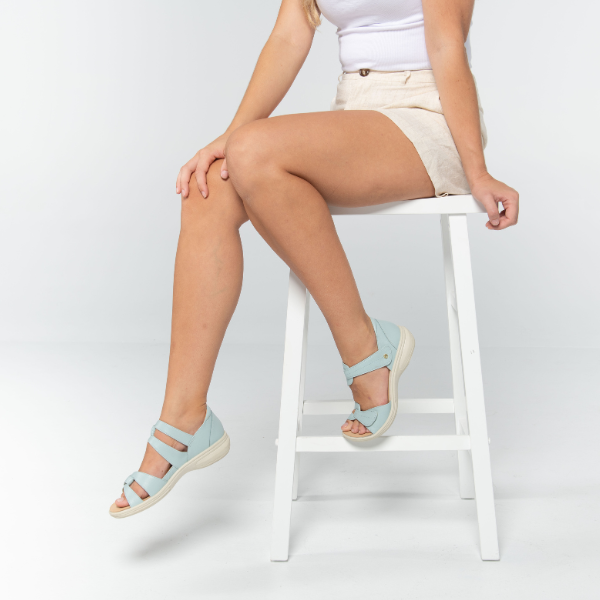
Warm weather exposes a bunion. Most sandals are flat and unsupportive, or cut a strap straight across the joint. We designed the Miami and Geneva to fix exactly that. The straps are placed and fully adjustable so they sit clear of the bunion instead of rubbing across it, with a contoured, supportive footbed underneath. They have become two of our most loved styles, and they are sandals you can genuinely wear all day.

The Miami Adjustable Sandal has three adjustment points, so fitting around a bunion is easy. The Geneva Sandal does the same with a single clean strap for a dressier look. Both take an orthotic via the removable footbed. See the wider Revere range for more colours.
Why it wins
- Straps designed to sit clear of the bunion, not across it
- Fully adjustable, with strap extensions included for a wider fit
- Contoured supportive footbed, removable for an orthotic
Bestselling bunion pick: the Revere Timaru
Think of the Revere range in two levels. The Miami and Geneva keep the straps clear of the joint, the subtler touch most people wear every day. The neoprene styles go further, putting soft, stretchy material right over the bunion when you want the shoe doing more of the work. Plenty of people are happy in either, so it comes down to how much give you want.
By what actually sells, the Revere Timaru Mary-Jane is the standout, built directly for the problem. That contrast section across the forefoot is a soft neoprene panel, sitting right over the bunion. It gives over the bump instead of pressing onto it, the single most useful thing a closed shoe can do here.

Around the panel it is a proper everyday flat: premium leather, a strap across the midfoot, a wide fitting for broader feet, and a removable footbed for an orthotic. Roomy, easy all day, and the Revere style people with bunions keep coming back for.
Why it wins
- Soft neoprene panel sits right over the bunion and stretches with it
- Wide fitting in premium leather, comfortable all day
- Removable footbed takes your orthotic
Revere builds the same panel into other shapes. The slip-on Naples Wedged Loafer carries it in a dressier loafer, and the Izmir Loafer pairs a neoprene and leather upper with a Forefoot Cushion Zone. For summer, the Amsterdam sandal uses a neoprene-lined upper on an adjustable fisherman design. For a polished alternative, the Genoa Stretch Loafer does it with a stretch panel rather than neoprene.
Best for the office: Vionic Kensley loafer
Dressier days are hardest, because smart shoes are the narrowest. The Vionic Kensley loafer is the exception: a soft, roomy forefoot with Vionic's built-in arch support,3 polished but never clamping the joint. Comfort is not a style trade-off.
Prefer a flat? The Vionic Caroll ballet flat in soft nappa is the roomier take, though a loafer's enclosed fit usually sits more kindly on a bunion. Browse the full Vionic range for more.
Why it wins
- Soft, roomy forefoot that will not clamp the joint
- Built-in Vionic arch support
- Polished enough for the office, in an enclosed shoe
Best for deeper or more painful bunions: the Anodyne range
When a bunion is advanced or painful, standard width is not enough and you want purpose-built depth. Anodyne again. The No. 45 Sport Jogger adds a heel-assist opening for easy entry, and the No. 28 Casual Oxford gives the same therapeutic fit in a smarter shape.
Across the range: extra width, extra depth, seam-free interiors, room for an orthotic. If your feet are hard to fit, start here. Our Anodyne page explains the therapeutic standard.
Why it wins
- Extra width and extra depth as standard for advanced or painful bunions
- Seam-free interiors, so nothing presses on the joint
- Heel-assist entry on the No. 45, a smarter oxford shape in the No. 28
Do shoes, socks or spacers fix a bunion?
No shoe, sock, spacer or splint reverses a bunion. The bony change is structural, and only surgery corrects the joint itself.4 What they can do is manage the symptoms, and for most people that is the goal: less pressure, less rubbing, less pain through the day.
The shoes do the heavy lifting. Bunion socks and toe spacers, like the ones OS1st makes, add a little relief by cushioning the joint and spacing the toes at rest, and they pair well with a roomy shoe. We dig into whether they work in our companion guide, Do Bunion Socks Actually Work? . See the OS1st range in the meantime.
How to get the fit right
A great shoe still needs a good fitting. A few habits help.
- Fit late in the day. Feet swell, so an afternoon fitting is your real size.
- Fit the wider foot. Bunions are rarely symmetrical.
- Width first, length second. Get the forefoot right, then check a thumb's width past the longest toe.
- Walk, do not just stand. A few minutes tells you if anything presses on the joint.
- Bring your orthotic. Fit with it in, using the removable footbed.
Rather not guess? Our team can match a shoe to your feet. Read what a Comfort Concierge is before you buy.
Bunion questions, answered
What is the best type of shoe for bunions?
A shoe with a wide, rounded, deep toe box and a soft or seam-free upper over the joint, ideally with adjustable fastening like laces or straps so you can open it around the bump. Medical-grade brands such as Anodyne are built to exactly this shape, but any shoe with real room and give at the forefoot will help.
Can the right shoes fix or reverse a bunion?
No. A bunion is a structural change to the joint, and only surgery corrects the bone itself. The right shoes manage the symptoms by taking pressure off the joint, which reduces rubbing and pain through the day. That is the realistic and worthwhile goal.
Should I just buy a bigger size to fit my bunion?
No. Sizing up adds length, not width, so the joint is still squeezed while the heel starts to slip. The better fix is the correct length in a wide or extra-wide fitting, or a brand built with extra depth like Anodyne.
Are sandals bad for bunions?
Only the wrong ones. A flat, unsupportive sandal or one with a strap cut straight across the joint will aggravate a bunion. An adjustable sandal with a contoured, supportive footbed, such as the Revere Miami or Geneva, lets you open the straps around the bump and is comfortable to wear all day.
Do bunion socks or toe spacers work?
They do not correct the bunion, but they can ease symptoms. Bunion socks and toe spacers, like those from OS1st, cushion the joint and gently space the toes at rest, which some people find soothing. They work best alongside a roomy, supportive shoe rather than on their own.
Room where it hurts
A bunion does not mean the end of comfortable shoes. The Comfort Co carries the widths, depths and adjustable fits that let your feet spread and settle.
Talk to a Comfort ConciergeReferences
- Nix S, Smith M, Vicenzino B. Prevalence of hallux valgus in the general population: a systematic review and meta-analysis. Journal of Foot and Ankle Research, 2010. jfootankleres.biomedcentral.com
- Buldt AK, Menz HB. Incorrectly fitted footwear, foot pain and foot disorders: a systematic search and narrative review of the literature. Journal of Foot and Ankle Research, 2018. jfootankleres.biomedcentral.com
- Vionic. Vio-Motion Support. vionicshoes.com.au
- Better Health Channel (Victoria State Government). Bunions. betterhealth.vic.gov.au