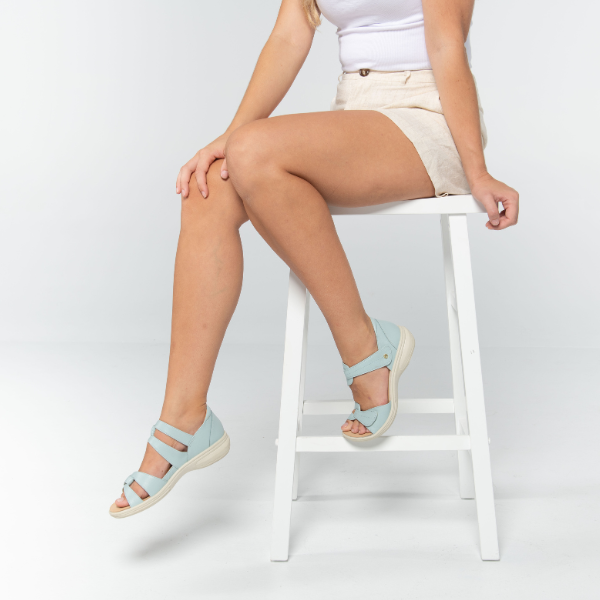











What are Flat Feet? A Podiatrist Explains the Causes and Treatment
Share
A podiatrist explains what flat feet are, how excessive pronation causes pain, and how they are managed.
By Sophie McLellan, Co-Owner & Podiatrist, Little Big Feet Podiatry, Brisbane
Key Facts
- What it isFeet that pronate (roll in) excessively, reducing or flattening the arch profile when weight bearing.
- Most at riskFlexible flat feet are common and often symptomatic when overloaded; rigid flat feet can be linked to some congenital and neurological conditions.
- Common symptomsPain in the feet, legs and back from excessive, repetitive pronation, often presenting as heel pain.
- Primary treatmentBiomechanical assessment, supportive footwear and orthotic therapy, with customised orthotics recommended in most cases.
What are flat feet?
Flat feet is a term commonly used to describe feet that pronate (roll in) excessively, resulting in the loss or reduction of the arch profile. Flat feet tend to have a negative connotation; however, the fact is that most feet pronate to some degree when a person is weight bearing. It is the degree of pronation, the ability to resupinate (to form an arch profile) and the flexibility or rigidity of the foot that should be considered. Fixed (rigid) flat feet can be associated with some congenital and neurological conditions and tend to be more problematic and difficult to treat conservatively. On the other hand, flexible (mobile) flat feet are commonly treated by Podiatrists, especially when a person is symptomatic.
What symptoms can flat feet cause?
When flat feet pronate excessively and repetitively, it may cause a number of symptoms in the feet, legs and back. For example, a patient may present with heel pain, whereby the main cause of that pain is excessive pronation (flat feet); and so, by identifying flat feet as the cause of the pain, a Podiatrist is then able to implement mechanical treatment to manage the pronation, and in turn the presenting symptoms.
How are flat feet treated?
Podiatrists typically treat symptomatic flat feet by undertaking a biomechanical assessment and analysis and implementing footwear changes or orthotic therapy.
Whilst off the shelf insoles and orthotics may be helpful in some instances, it is important to note that each person's prescription for treatment will vary, so customised orthotic therapy is recommended in most instances.
The Comfort Co Breakdown
Flat feet, in plainer English
Flat feet means your arches sit low or flatten out when you stand, because your feet roll inward (pronate) more than they should. A little pronation is completely normal. It is when it becomes excessive and repetitive that it starts causing trouble further up the chain.
Why is this happening?
Some people are simply built this way. Flexible flat feet are common and often cause no problems until the load goes up.
The way your foot rolls. Excessive pronation lets the arch collapse with each step, which changes how force travels through the foot, leg and back.2
Not enough support. Flat, flimsy shoes give the arch nothing to lean on, so the soft tissue takes the strain all day.
What happens if I ignore it?
Left unmanaged, excessive pronation can show up as heel pain, sore arches, aching legs and even lower back pain, because the whole chain compensates. The good news is that supporting the arch is exactly what the right footwear does, and it is often enough to settle the symptoms.1
Written by The Comfort Co team.
The Comfort Co Solutions
Good news. Managing excessive pronation is essentially what The Comfort Co does, so you have come to the right place. If your flat feet have reached the point where you need specialised treatment from a podiatrist, please do that. Otherwise, let's get it sorted.
1. Built-in arch support
Get yourself a pair of shoes with arch support built in and feel the difference straight away. Most of the range on The Comfort Co has excellent arch support built in, and many customers rave about the support in Vionic shoes. Browse the full arch support collection to see what suits your feet.
2. Insoles for shoes you already own
If your shoes do not have arch support built in but you love them anyway, there is no need to fret. A pair of insoles can turn almost any shoe into the arch-support wonders your podiatrist will love. Have a look through the insoles range, including the Vitasole Orthotic Insoles.
3. Know when to go custom
Off-the-shelf support handles a lot of everyday flat-foot symptoms, but if your pain is persistent or your pronation is significant, a podiatrist can assess your feet and prescribe customised orthotic therapy tailored to you.
Comfort Co Pro Tip
Not sure how flat your feet really are? Try the wet footprint test. Wet the sole of your foot, step onto a dry surface, and look at the mark. A full, filled-in print points to a low arch and more pronation, which is your cue to prioritise built-in support.
Keep Reading
Quick questions
Are flat feet a problem?
Not always. Most feet pronate to some degree, and flexible flat feet often cause no issues. Treatment is usually only needed when flat feet become symptomatic.
What causes flat feet?
Flat feet come from excessive, repetitive pronation where the arch collapses under weight. Some cases are flexible and common, while rigid flat feet can be linked to congenital or neurological conditions.
Can flat feet be fixed?
Flexible flat feet are usually managed rather than cured, most often with supportive footwear and orthotic therapy. A podiatrist can assess the degree of pronation and tailor a plan.
What shoes are best for flat feet?
Shoes with firm, built-in arch support help manage pronation. If your favourite shoes lack support, a supportive insole can convert them.
Do I need custom orthotics for flat feet?
Not always. Off-the-shelf insoles help in some cases, but because each person's needs differ, customised orthotic therapy is recommended in most instances.
Sources
- Cleveland Clinic. Flatfeet (Fallen Arches). my.clevelandclinic.org
- OrthoInfo, American Academy of Orthopaedic Surgeons. Adult Acquired Flatfoot. orthoinfo.aaos.org