










How to Start Exercising on a Budget: The Vitasole Starter Kit, From $0 Up
Everything costs more right now. Moving your body does not have to be one of those things.
Start for free. Spend on your feet first. Add the rest only once you are actually using it.

Tosh Coombridge
Everyday Movement Coach
Cert 3 and 4 qualified, here to make starting feel a lot less scary than it sounds.
Money is tight for a lot of people at the moment, and the fitness industry has a funny way of making a first step look expensive. Memberships, wearables, matching sets, the tub of something with a scoop in it. I have been training for twelve years and the ads still find me, so I know how loud it gets. For someone just starting out (who doesn't even know if they're going to stick to it) this can be really daunting.
Here's the bit many people forget at the start of this journey, you can start exercising for nothing! For me, the only thing worth paying for early is decent support under your feet. A good budget starter kit has three parts: a free way to move most days, a supportive insole in the shoes you already own, and a rule that you only buy the next thing once you are using the last one. The three tiers below are built exactly that way.
This is for anyone starting from scratch or coming back after a long break, whether your version of exercise ends up being walks, a weekend 5km, or lifting things in the lounge room.
Section 01
The starter kit at a glance
Three tiers, each one only worth moving to once the last one is part of your week.
| Tier | What it costs | What is in it | Move up when |
|---|---|---|---|
| Tier 0: Free | $0 | Walking, bodyweight at home, YouTube, outdoor gyms, parkrun, free walking groups | You are moving most days and want a bit more |
| Tier 1: Starter pack | From $49.95 | Supportive insoles for the shoes you already own, plus a few optional extras | Your training picks up, or your shoes are worn out |
| Tier 2: More serious | Spend as you go | A proper pair of supportive shoes, a second pair to rotate, insoles moved or upgraded, a recovery sandal, coaching in small doses | You decide. There is no exam |
The gist
Start free, put your first dollars into your feet, and leave everything else until you have earned it.
Section 02
Tier 0: the free ways to move
Walking is where I would start almost anyone, and I say that as someone who loves a barbell far more than is reasonable. It needs no booking, no gear beyond your shoes, and no confidence. Australia's physical activity guidelines ask adults for 150 to 300 minutes of moderate activity a week, plus muscle-strengthening activity on at least two days.1 Spread across a week, the lower end is a bit over 20 minutes a day, and a brisk walk counts.
Steps add up faster than you would think. A big 2022 study of nearly 48,000 adults found that people who walked more tended to live longer. The sweet spot was around 6,000 to 8,000 steps a day for adults over 60, and 8,000 to 10,000 for those under 60. Past that, the benefit levelled off.2 It is a pattern across lots of people rather than a guarantee for you or me, and still a pretty good argument for a free hobby.
Here are the free options I would point a beginner toward, roughly from easiest to start to most social.
- A walk from your front door. Ten minutes out, ten minutes back. Do that most days for a fortnight before you worry about anything else.
- Bodyweight at home. A chair, a wall and the bottom stair are a full strength session: sit-to-stands, wall push-ups, step-ups, and a few calf raises while the kettle boils. Our 10 easy exercises for fitness newbies walks through a starter set. Two sessions a week covers the strength half of the guidelines.
- YouTube, chosen carefully. Yoga With Adriene is still the kindest place to start, and we rounded up more in our best YouTube yoga channels piece. MadFit has short, no-equipment sessions, and growingannanas does low-impact workouts quiet enough for an apartment. Save Caroline Girvan for later. She is brilliant, and she will absolutely flatten you.
- Outdoor gyms. Plenty of councils have put free fitness equipment in local parks, and your council's website usually lists where. Pull-up bars, step platforms and benches are a strength session with a view.
- parkrun. A free, timed 5km every Saturday morning, and you are allowed to walk the whole thing. Register once at parkrun.com.au, bring your barcode, and turn up. There is a volunteer tail walker at the back, so you cannot come last.
- A free walking group. Heart Foundation Walking runs free community walking groups right around Australia, and more than 350,000 people have joined one since it started in 1995.3 Ideal if, like most of us, you keep promises to other people better than you keep them to yourself.
Free does have limits, and it is worth being upfront about them. Nobody checks your form, nobody notices if you skip a week, and the motivation is all yours to find. A walking group or an exercise buddy plugs most of that gap without costing a thing.
Worth remembering
Walking covers the cardio half of the guidelines and bodyweight at home covers the strength half. Neither costs a cent.
Section 03
Tier 1: the starter pack
If you are going to spend money on one thing, make it your feet. I know how that sounds coming from someone who works for a footwear company, but the reasoning holds up! Your shoes are the only piece of kit you use in every single session on the free list above. Walking, parkrun, the outdoor gym, even the step-ups at home on a hard floor.
For light training like this, the shoes you already own would probably do the job. As long as they still fit and still have some life in them, the cheapest upgrade is the bit that sits inside them.
Insoles
An insole is the cheapest way to add arch support to shoes you already own. The Comfort Full Length Orthotic Insoles ($49.95) are medium density and suit walking and long days on your feet. Already running or doing circuits? The firmer Active Full Length Orthotic Insoles ($49.95) are built for exercise. Both come with a Support Booster if you want a bit more arch.
Both need a footbed that lifts out. If yours is glued in, the Comfort 3/4 Orthotic Insoles ($49.95) sit on top instead.
The catch: an insole cannot save a shoe that is the wrong width or worn flat. Not sure about yours? Our guide to how long shoes should last will tell you, and if they are done, skip to Tier 2.

Vitasole insoles
Comfort Full Length Orthotic Insoles
Lift out the flat footbed, drop these in, and a pair you already own gets contoured arch support without you buying new shoes.
Shop the Comfort Full LengthOptional extras (they mostly do not need to be ours)
- A resistance band set. Usually inexpensive at big-box and sports stores, and it turns bodyweight sessions into proper strength work once sit-to-stands start feeling easy.
- Something soft for floor work. A yoga mat is nice. A folded towel on carpet does the same job for free.
- A water bottle. You almost certainly own one already. If not, I love my Comfort Co bottle.
The short of it
Use the shoes you have, add insoles if they need more support, and let everything else wait until you miss it.
Section 04
Tier 2: when you want to get more serious
Once you are moving most days and starting to push a little, the kit worth adding changes. This is the order I would add it in, most useful first.
1. A proper pair of shoes
If your current shoes are worn out, or your sessions have outgrown them, this is where the money goes. Every Vitasole shoe carries VX Technology: a rocker sole that helps your stride roll through, EVA cushioning, and contoured arch support in the footbed. Here are the two I would choose between.
Walker Mesh III
The first proper pair I would point most people to. The Walker Mesh III Active Sneaker ($159.95) has a thick, cushioned VX midsole and a breathable engineered-mesh upper, and it comes in medium and wide. The footbed lifts out, so if you ever need your own orthotic it goes straight in. It is a walking shoe first, so once you start running, doing circuits or picking up the pace, the Icarus below is the better fit.

Vitasole
Walker Mesh III Active Sneaker
Rocker sole, thick cushioned midsole, arch support in the footbed, medium and wide. The pair to build the habit around.
Shop the Walker Mesh IIIIcarus
The one built for when things start to get a bit serious. The Icarus Sneaker ($179.95) is a lace-up trainer with a stretchy engineered-knit upper, VX Ultra Rebound foam that has real spring in it, and a carbon fibre shank for stability. This is the pair for running, circuits, classes and anything faster than a walk. I would not buy it as a first pair. It earns its price once your sessions get quicker or longer and you want something that gives a bit back.

Vitasole
Icarus Sneaker
Engineered knit, rebound foam and a carbon fibre shank. For when walking turns into workouts.
Shop the Icarus2. A second pair, for rotation
This is the one people skip, and it is the one with some research behind it. A study that followed 264 recreational runners for 22 weeks found that those who rotated more than one pair of running shoes had a 39 per cent lower risk of running-related injury than those who stuck to one.4 Worth knowing its limits: it looked at runners rather than walkers, and a study like this shows a link, not proof that the shoes caused it. The researchers' theory is that different shoes vary the load on your body, which makes sense to me. A second pair also gives each one a day to dry out between sessions.
The easiest rotation is the pair you started in plus your first proper pair, kept for easy days. Once you are training most days, the Walker and the Icarus make a natural team: one for the long walks, one for the faster stuff.
3. Insoles again, this time for the rotation
Remember the insoles from Tier 1? This is where they get a second life. If you started with insoles in an older pair, that pair now becomes your easy-day shoe, and the insoles can move across to whichever pair needs them most that week. If your training has moved toward running, circuits or long hours on your feet, this is also the time to step up to the firmer Active Full Length Orthotic Insoles ($49.95), with the same Support Booster in the box. Same rule as before: the footbed has to lift out.
4. Something for afterwards
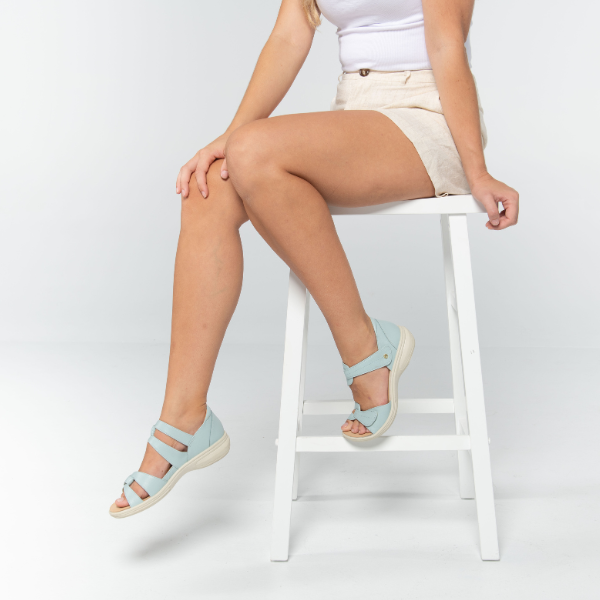
The Vitality Recovery Toe Post Sandal ($69.95) is what I go looking for the second my training shoes come off. Deep cushioning, a contoured footbed, and nothing gripping anything. Fair warning: plenty of people buy it as a recovery sandal and end up wearing it every single day.

Vitasole
Vitality Recovery Toe Post Sandal
For the hours after a session, when your feet have done their bit and would like a thank-you.
Shop the Vitality Recovery5. Coaching, in small doses
I coached at UBX, so I am a big fan of classes, and I would still tell you to pay casual before you sign anything. A handful of personal training sessions spent learning to squat and hinge properly will teach you more than a 12-month contract you stop using by March. Book a few, ask for a programme you can do on your own, then go back every couple of months for a check-in.
Long story short
Buy one proper pair, rotate once you are training most days, move the insoles to wherever they help most, and buy coaching in small doses before you ever buy a contract.
Section 05
How to know you are ready to level up
There is no test to pass. These are the signs I look for in the people I train with.
- You have moved three or more days a week for about a month, and it has stopped feeling like a big deal.
- Your usual walk feels easy. Moderate effort means you can talk but would struggle to sing, so if you could belt out a whole song, add a hill or a few minutes.
- One pair of shoes is doing every session, and you can see it in the tread.
- You are a little bit bored. Boredom is a great sign, because it means the habit has stuck.
Things that are not a sign: a targeted ad, a new month, or someone else's progress photos. When you do step up, add a little at a time rather than doubling anything. Our piece on why your feet hurt after a long walk covers what happens when you triple your distance in one go. Spoiler: your feet notice.
Section 06
What to skip, at least for now
A little fitness-industry myth-busting, because this is where budgets quietly leak.
- A fitness tracker. As much as I LOVE my Apple Watch, your phone already counts your steps. It can be a great motivator (I love the little ding when I hit 10,000 steps), so if you would use it for other things too, why not?
- Supplements and powders. Nobody needs a tub of anything to start walking.
- A whole new wardrobe. Anything you can move in will do. The matching set is lovely and completely optional.
- Long contracts. Do a month of free movement first. If you are still going, the gym will still be there.
- Gear for the athlete you might become. Buy for the sessions you are doing now.
I say all this as someone who owns more lifting shoes than I would like to admit. None of them had me adding the big plates to the barbell fresh out the box, you still have to show up. That's the most important bit.
The bottom line
If it does not help you move this week, it can wait for next month.
Your first session costs nothing. Let's go.
Lace up whatever is by the door, get out there, and come back for the good stuff once you are hooked.
I will be cheering you on from the sidelines.
Shop VitasoleQuick questions
Quick questions
How can I start exercising with no money?
Walking, bodyweight exercises at home, free YouTube workouts, outdoor gyms in parks, parkrun and free community walking groups all cost nothing. Together they can cover Australia's guideline of 150 to 300 minutes of moderate activity a week plus strength work on two days. The one thing worth spending on early is supportive footwear, because you use it in every session.
What is the cheapest way to add arch support to shoes I already own?
A supportive replacement insole is the lowest-cost option, as long as the shoe's footbed lifts out. Vitasole's Comfort Full Length Orthotic Insoles are $49.95. For exercise-specific, firmer support, the Active Full Length is the same price. If the footbed is fixed, a three-quarter insole such as the Comfort 3/4 sits on top instead. An insole cannot fix a shoe that is the wrong width or worn out, so a fully supportive shoe is still the better long-term option.
Do I need proper shoes to start exercising?
Not usually. For light training such as walking and bodyweight work at home, the shoes you already own will probably do the job, as long as they fit well and are not worn out. A supportive insole is a cheap way to add arch support to them. Once you start training harder or more often, a supportive pair with the right width, cushioning under the heel and forefoot, and arch support in the footbed is worth the spend.
Is it worth having two pairs of exercise shoes?
Once you are training most days, a second pair is worth considering. A 22-week study of 264 recreational runners found those who rotated more than one pair had a 39 per cent lower risk of running-related injury, although it showed a link rather than proof of cause. Rotating also gives each pair time to dry out between sessions.
When is a gym membership worth paying for?
Usually once you have exercised consistently on free options for at least a month and want equipment or coaching you cannot get at home. Paying casually, or booking a few personal training sessions first, is a lower-risk way to test it before you sign a long contract.
Wondering whether walking is enough on its own? Our walking vs the gym breakdown has the answer.
References
- Australian Government Department of Health, Disability and Ageing. Physical activity and exercise guidelines for adults (18 to 64 years). health.gov.au
- Paluch AE, Bajpai S, Bassett DR, et al. Daily steps and all-cause mortality: a meta-analysis of 15 international cohorts. Lancet Public Health, 2022;7(3):e219-e228. pubmed.ncbi.nlm.nih.gov
- Heart Foundation Walking. About Heart Foundation Walking. heartfoundationwalking.org.au
- Malisoux L, Ramesh J, Mann R, Seil R, Urhausen A, Theisen D. Can parallel use of different running shoes decrease running-related injury risk? Scandinavian Journal of Medicine and Science in Sports, 2015;25(1):110-115. pubmed.ncbi.nlm.nih.gov